When you hear someone mention '"For What It's Worth" Full Lyrics', your mind might instantly jump to one iconic artist, but here's where things get interesting: there are actually two widely recognized, incredibly potent songs sharing this very title, each delivered by a titan of music. One hails from the ethereal storytelling of Stevie Nicks, the other from the raw, unapologetic voice of Liam Gallagher. While they share a name, their stories, their emotional landscapes, and their core messages couldn't be more distinct. Prepare to dive deep into both, uncovering the profound narratives, the hidden meanings, and the sheer power packed into these identically titled, yet wildly different, musical masterpieces.
At a Glance: Two Songs, One Title
- Stevie Nicks' "For What It's Worth": A wistful reflection on a "forbidden, outrageous, contagious" romance, inspired by a summer tour with Tom Petty. It speaks of love that saved a life, good intentions, and the bittersweet understanding that some powerful connections just aren't meant to last.
- Liam Gallagher's "For What It's Worth": A heartfelt, yet typically candid, apology for past mistakes, dedicated to his family. It’s an introspective look at life’s struggles, the desire to build bridges, and the challenge of swallowing pride, all wrapped in a classic rock anthem style.
- Shared Ground? Only the title. Their lyrical content, musical styles, and underlying inspirations are entirely unique.
- Key Takeaway: Don't assume you know which song someone means until you hear a few more lines!
Stevie Nicks' "For What It's Worth": A Dance with Destiny and Doubt
Stevie Nicks, the mystical muse of Fleetwood Mac and a solo icon in her own right, delivered her version of "For What It's Worth" as the powerful lead single from her 2011 album, In Your Dreams. This wasn't just another track; it was a deeply personal narrative, born from a period of profound inspiration and a touch of heartbreak.
The Spark of Inspiration: Best Summer Ever
Imagine spending a summer on the road, performing nightly with one of rock's most beloved figures, feeling a creative surge unlike any other. For Stevie Nicks, that period came while touring with the late, great Tom Petty. She openly described it as the "best summer" of her life, a time when her creative wellspring overflowed. It's no surprise, then, that Petty himself features in the official music video for "For What It's Worth," a testament to their enduring friendship and mutual respect.
Nicks herself stated that she intended for listeners to interpret the song as they wished, leaving room for personal connection rather than dictating a single narrative. This open-ended approach is a hallmark of truly great songwriting, allowing the music to become a canvas for individual experiences.
Decoding the Lyrics: Forbidden Love and Lifesaving Connections
At its heart, Stevie Nicks' "For What It's Worth" chronicles a "forbidden, outrageous, contagious" romance. From the very first lines, you're pulled into a world of intense emotion, a connection so profound it's described as lifesaving. The lyrics paint a vivid picture of a love that defied convention, one that likely came with complications but offered an undeniable sanctuary.
Consider the hypothetical scenario Nicks weaves: "If I left my girlfriend, I'd come to your house / With good intentions, oh, with good intentions." This line alone speaks volumes. It’s not just about a fleeting desire; it implies a deeper entanglement, a pre-existing commitment that makes this new, powerful attraction fraught with difficulty. The "good intentions" hint at a purity of feeling, a hope that something beautiful could blossom despite the complex circumstances.
The relationship Nicks sings about is characterized by profound comfort and solace. The partner holds hands, takes away fear, and provides a sense of peace that was perhaps missing before. Yet, there’s a melancholic undercurrent: "Though they knew it couldn't last." This recognition of impermanence adds a layer of wistful beauty to the song, acknowledging the transient nature of even the most powerful connections. It’s a love savored in the moment, understood to be fleeting, but no less impactful because of it.
Imagery, a Nicks staple, is present too, with lines about watching "cars fly by from a window." This simple observation evokes a sense of quiet contemplation, a moment of shared intimacy while the world outside rushes past, oblivious to the profound personal drama unfolding within.
The phrase "for what it's worth" in this context feels like a gentle offering of truth, a quiet confession of feeling without expectation or demand. It's a statement of profound emotional value, shared regardless of outcome. To fully appreciate the lyrical nuances and emotional depth, it's worth revisiting the core What Its Worth lyrics themselves.
Liam Gallagher's "For What It's Worth": A Raw Apology and a Bridge to the Past
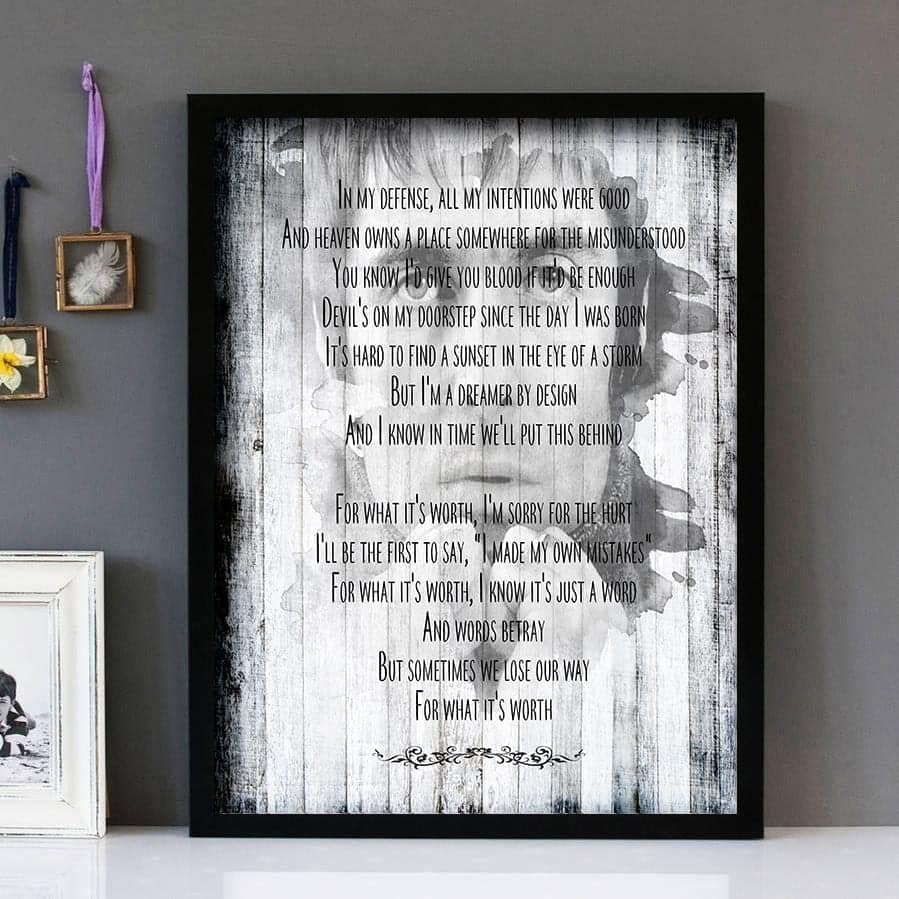
Shifting gears entirely, we arrive at Liam Gallagher's "For What It's Worth," a track that stands as one of the most honest and introspective moments from his 2017 album, As You Were. This isn't a tale of forbidden love; it's a poignant, if typically swaggering, mea culpa, reflecting on a life lived loudly and the wake of its consequences.
The Genesis of Regret and Reconciliation
Liam Gallagher, known for his distinctive vocal delivery and his often-combative persona, revealed a softer, more reflective side with this song. Released as the third single from As You Were, it quickly resonated with fans who appreciated its stripped-down honesty. Gallagher stated that the song was an apology "to whoever" he had "pissed off," a broad but undeniably heartfelt sentiment. He famously added, "There’s one there. Fuckin' deal with it and move on." This very Liam-esque delivery perfectly encapsulates the song's tone: sincere, yet still imbued with his characteristic bluntness.
More specifically, Gallagher dedicated the song to his children and his mother, highlighting the deeply personal nature of his regret and his desire for reconciliation. It’s an acknowledgment that his past actions, no matter the intention, caused pain, and a step towards healing those relationships.
Lyrical Deep Dive: Mistakes, Pride, and the Path Forward
Liam's "For What It's Worth" is an outright apology. The narrator acknowledges "good intentions" but doesn't shy away from admitting, "I made my own mistakes." This self-awareness is crucial. It’s not a blame game; it’s a recognition of personal accountability. The lyrics delve into the difficulties of life, the feeling of being "crucified for just being alive," and the toll of what he calls a "whispering war"—perhaps a reference to the internal battles or public feuds that have marked much of his career.
The song is a plea to overcome the past, to build bridges that may have crumbled, and crucially, to swallow pride. For someone often perceived as fiercely proud, this admission is particularly powerful. It speaks to a maturity and a desire to mend fences that might not have been evident in earlier stages of his career. The repeated phrase "for what it's worth" here functions as an offering, an honest statement of regret and hope, even if the recipient chooses not to accept it. It's a humble submission, wrapped in the familiar musical packaging of a classic Gallagher anthem.
Gallagher described it as a "classic, beautiful song" with "a lot of emotion," and perhaps most tellingly, "the most Oasis-y kinda song on the album," expressing pride in his former band. This connection to Oasis isn't just about sound; it's about the emotional resonance and the ability to craft a powerful, universally relatable rock anthem. The mid-tempo, introspective nature allows the lyrics to breathe and the sentiment to truly sink in.
Two "For What It's Worth": A Study in Contrasts
It's truly remarkable how two songs can share the exact same title yet explore such vastly different emotional and thematic landscapes.
Thematic Divergence
- Stevie Nicks: Primarily focused on the bittersweet nature of a powerful, perhaps illicit, romantic connection. It's about feeling saved by love, cherishing a moment, and understanding its ultimate impermanence. The "for what it's worth" here is a tender, perhaps even wistful, offering of truth about a significant past experience.
- Liam Gallagher: A direct, introspective apology for past mistakes and a desire for personal redemption and reconciliation. It’s about facing consequences, swallowing pride, and hoping to build a better future. The "for what it's worth" acts as a humble, yet still defiant, admission of fault and a plea for understanding.
Musical and Tonal Differences
- Stevie Nicks: Her version typically carries a more atmospheric, almost dreamy quality, characteristic of her solo work. The production is polished, often with layered vocals and instrumentation that evokes a sense of reflective longing. The tone is contemplative and poignant.
- Liam Gallagher: His rendition is a classic rock ballad, rooted in the melodic sensibilities of Oasis. It has a robust, anthemic feel, even in its introspection. The tone is earnest, direct, and carries a palpable sense of working through difficult emotions.
The shared title becomes almost an ironic footnote when you consider the gulf between their content. It highlights how common phrases in our language can be imbued with vastly different emotional weight depending on the context and the messenger. Both artists, in their unique ways, leverage the phrase to introduce a statement of personal significance, delivered without pretense but with undeniable emotional impact.
Why These Songs Resonate: Universal Themes in Distinct Voices
Despite their differences, both "For What It's Worth" songs tap into universal human experiences that explain their enduring appeal.
The Power of Love (Stevie Nicks)
Nicks' song speaks to anyone who has experienced a profound, perhaps complicated, love that altered their life's trajectory. It’s about the feeling of being utterly consumed and uplifted by another person, even when logic dictates it cannot last. This resonates because many of us have those "what if" or "if only" relationships that leave an indelible mark, teaching us profound lessons about ourselves and the nature of connection. Her ability to convey raw emotion through poetic lyrics makes the forbidden romance feel incredibly personal and relatable.
The Struggle for Redemption (Liam Gallagher)
Gallagher's anthem speaks to the universal struggle of accountability and the desire for forgiveness. Who hasn't made mistakes they regret, or hurt someone they care about? His willingness to express remorse, even with his signature edge, provides a soundtrack for anyone grappling with their past actions and striving for a better future. It’s about the hard work of building bridges, overcoming ego, and facing the consequences of one’s choices. This message of growth and humility, delivered through a powerful rock anthem, is incredibly potent.
Both songs, in their own unique styles, invite listeners to reflect on their own lives, relationships, and decisions. They serve as sonic mirrors, prompting introspection and empathy.
Frequently Asked Questions About "For What It's Worth"
Are Stevie Nicks' and Liam Gallagher's "For What It's Worth" related in any way?
No, beyond sharing the exact title, the two songs are completely unrelated. They were written independently, inspired by different life events, and released by different artists in different eras.
Which "For What It's Worth" was released first?
Stevie Nicks' "For What It's Worth" was released in 2011 on her album In Your Dreams. Liam Gallagher's "For What It's Worth" was released in 2017 on his album As You Were. Therefore, Stevie Nicks' version came first.
Why do they have the same title? Is it a coincidence?
It's simply a coincidence. The phrase "for what it's worth" is a common English idiom, meaning "this is my opinion or suggestion, and it may or may not be helpful/valuable." Both artists likely chose the title because the phrase perfectly encapsulated the sentiment they wished to convey in their respective songs, without knowledge of the other's work. It's a testament to the power and versatility of common language.
How do I know which song someone is referring to when they say "For What It's Worth"?
Often, the context or the artist's name will clarify it. If someone mentions Fleetwood Mac or a more ethereal, folk-rock sound, they're likely talking about Stevie Nicks. If they mention Oasis, a rock anthem, or a gruff British accent, they're likely referring to Liam Gallagher. A quick listen to the opening bars will immediately differentiate them.
Embracing the Dual Narrative
The existence of two such significant songs titled "For What It's Worth" serves as a fascinating example of how art mirrors life – filled with shared expressions but deeply personal experiences. Stevie Nicks offers a tender, contemplative look at a love that was, while Liam Gallagher provides a raw, rock-and-roll apology for mistakes made.
As listeners, we're gifted with two distinct opportunities to connect with powerful emotions: the wistful beauty of a love that saved a life but couldn't endure, and the humbling strength of an apology that seeks to heal. Both songs, in their own right, enrich our understanding of the human condition. So the next time you hear "For What It's Worth," take a moment to consider which journey you're about to embark on – the ethereal contemplation or the rock 'n' roll redemption. Either way, you're in for a profound musical experience.